Where can you see Galileo's own telescopes, two minutes from the Uffizi?
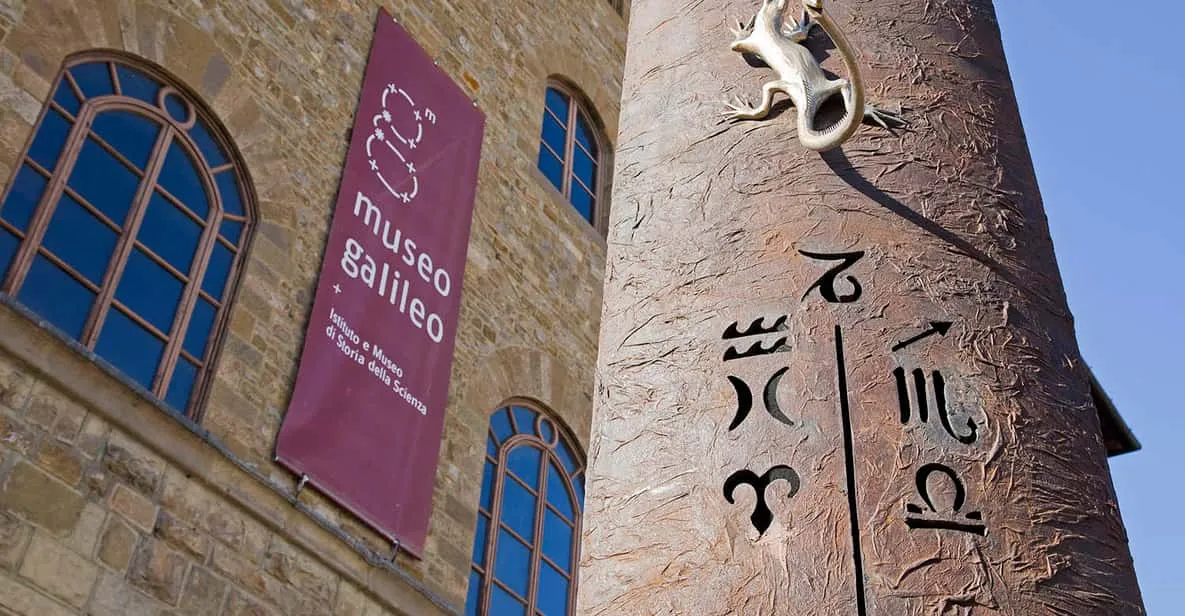
Museo Galileo sits on the Arno directly behind the Uffizi, in a medieval palace that once held the Medici and Lorraine science collection. Inside are the only two telescopes Galileo built that survive, the broken lens through which he found Jupiter's moons, and instruments ranging from astrolabes to early thermometers. This guide covers what the $20 entry ticket gets you, what the museum actually holds, and how to time a visit around the shorter Tuesday hours.
About This Experience
Piazza dei Giudici 1, 50122 Florence, on the Arno directly behind the Uffizi
2 minutes on foot from the Uffizi, right on the river. Florence has no metro; the centre is walked
Daily 9:30 to 18:00, Tuesdays to 13:00. Open every day, including Mondays
$20 online; €13 at the door for walk-ins
The Medici and Lorraine science collection, in a medieval palace on the Arno
Galileo's own telescopes, the lens that found Jupiter's moons, and his middle finger in a glass egg
Check Live Availability & Prices
There is one ticket for Museo Galileo, so checking live pricing mostly confirms the $20 entry fee and today's hours before you plan the rest of the day.
Which Museo Galileo Ticket to Pick
The $20 ticket is a straight entry ticket to Museo Galileo, nothing more. It gets you into the medieval palace on the Arno and past every room of the Medici and Lorraine instrument collection, from Galileo's own telescopes to the armillary spheres and early thermometers. There is no guided option on offer here, and the museum is labelled well enough in Italian and English that most visitors do not need one.
This suits anyone who wants something to do with a Florence morning that the state museums cannot fill, because Museo Galileo opens on Mondays, when most of the big galleries are shut, and it stays air-conditioned and close to empty most of the year. At two minutes from the Uffizi, it also slots neatly into a longer museum day without adding real walking time.
What it does not cover is the rest of Florence's museum scene, and a $20 ticket for one room of science instruments will feel steep to visitors who only want the paintings. Readers weighing this stop against the bigger galleries can browse the fuller list of Florence museum tickets before deciding where the day's budget goes.
Book Your Museo Galileo Ticket
One ticket covers Museo Galileo; here is the entry ticket that gets you in.
from $20 Museo Galileo Entry Ticket
The Medici science collection, with the lenses Galileo ground himself, the telescope he turned on Jupiter's moons, and his middle finger in a glass egg. Beside the Uffizi…
- Galileo's own telescopes
- Medici instrument collection
- Quiet, beside the Uffizi
What You'll See
The two surviving telescopes Galileo built himself sit at the centre of the collection, alongside the broken objective lens, mounted in an ivory frame, through which he first saw Jupiter's moons in 1610. Nearby, in a glass egg on its own plinth, is Galileo's middle finger, removed from his corpse by an admirer in 1737 when the body was moved to Santa Croce. It points upward, which given the trial he went through, was rather the argument.
Past the Galileo rooms, the collection widens into Medici and Lorraine instruments built at enormous expense: room-sized brass armillary spheres modelling a universe that turned out to be wrong, astrolabes, quadrants, and cases of early surgical and pharmaceutical tools. It is a reminder that the Renaissance in Florence was not only painting.
How a Visit Flows
-
On arrival
Piazza dei Giudici
The entrance sits on the Arno, in the medieval palace directly behind the Uffizi.
-
10 minutes in
Galileo's telescopes
The two surviving telescopes he built himself are held here, next to the cracked lens he used to find Jupiter's moons.
-
25 minutes in
The glass egg
Galileo's middle finger, kept under glass since it was removed from his corpse in 1737, sits its own plinth nearby.
-
35 minutes in
The armillary spheres
Room-sized brass spheres model a universe that turned out to be wrong, built at enormous Medici expense regardless.
-
50 minutes in
The instrument galleries
Astrolabes, quadrants, early thermometers, and surgical and pharmaceutical tools fill the rooms that follow.
-
Around an hour
Back out to the Arno
Exit onto the river; the Uffizi is two minutes away if there is more museum day left in you.
Know Before You Go
Not suitable for
- Visitors expecting a guided tour with commentary
- Anyone looking for Renaissance painting rather than scientific instruments
- Children needing hands-on exhibits; most cases are look-only
What to bring
- A booking confirmation, on your phone or printed
- A form of photo ID that matches the name on the ticket
- Comfortable shoes for the cobbled streets along the Arno
- A light layer; the galleries stay cool through summer
Not allowed
- Flash photography near the instruments
- Large bags and backpacks; small ones only
- Food or drink inside the galleries
Insider Tips
A few things make this stop worth the detour from the bigger galleries.
- Go right after the Uffizi. It is two minutes away and a natural next stop rather than a special trip.
- Save it for a Monday. It is one of the few major Florence museums open that day, when the state galleries are shut.
- Budget an hour to an hour and a half; that covers the collection without rushing.
- Watch for the Tuesday early close at 13:00; it catches people out who assume normal hours.
- Skip guided extras elsewhere and lean on the labelling here; it is thorough enough in English that a guide adds little.
- Look for the glass egg near the telescopes; it is easy to walk past if you are focused only on the instruments.
Where You're Headed
Museo Galileo Tickets FAQ
How much are Museo Galileo tickets?
The online ticket costs $20. Walking up without a booking costs €13 at the door.
What are the Museo Galileo opening hours?
The museum opens daily from 9:30 to 18:00, with an early close at 13:00 on Tuesdays. It is open every day, including Mondays.
Which day is Museo Galileo closed?
It isn't. Museo Galileo is open every day of the week, including Mondays, when many of Florence's other major museums are shut.
How do you get to Museo Galileo?
It sits on the Arno directly behind the Uffizi, about two minutes on foot. Florence has no metro, so this, like everything in the centre, is walked.
What do you actually see inside?
Galileo's own surviving telescopes, the lens he used to find Jupiter's moons, his middle finger preserved in a glass egg, and the wider Medici and Lorraine collection of scientific instruments.
Do you need to book Museo Galileo tickets in advance?
No advance booking is required and the museum rarely sells out, but booking the $20 ticket ahead avoids the door line during peak season.
How long does a visit take?
About one to one and a half hours covers the collection without rushing.
Is there a guided tour option?
No. This is an entry ticket only. The museum is well labelled in Italian and English, so most visitors do not miss having a guide.
What Visitors Say
We went straight from the Uffizi and it was the perfect antidote, cool, quiet, and almost nobody else in the rooms. Seeing the actual telescope he used stopped me in my tracks.
Smaller than I expected but exactly what we wanted after three hours of paintings. The glass egg with his finger is stranger than any photo prepares you for.
Went on a Monday when everything else was shut and had the armillary spheres almost to ourselves. Worth planning a day around.